Hist ric Hartfrd Synaggues
Although a synagogue structure is not necessary for Jewish prayer, the building of a synagogue represents the creation of a center for both worship and community. In a synagogue, Jews join together not only to pray, but to study, socialize, educate their children, and to care for the needs of their own members as well as the larger community. There were once thirteen synagogues in Hartford, CT. There are no longer any active congregations remaining in the city, although a number of the buildings are still in existence. Some are abandoned and have fallen into disrepair, and others have been repurposed, often as churches. This web exhibit utilizes the archive of the Jewish Historical Society of Greater Hartford to offer images and information on the synagogues that once existed in Hartford.


Tikvoh Chadoshoh Synagogue
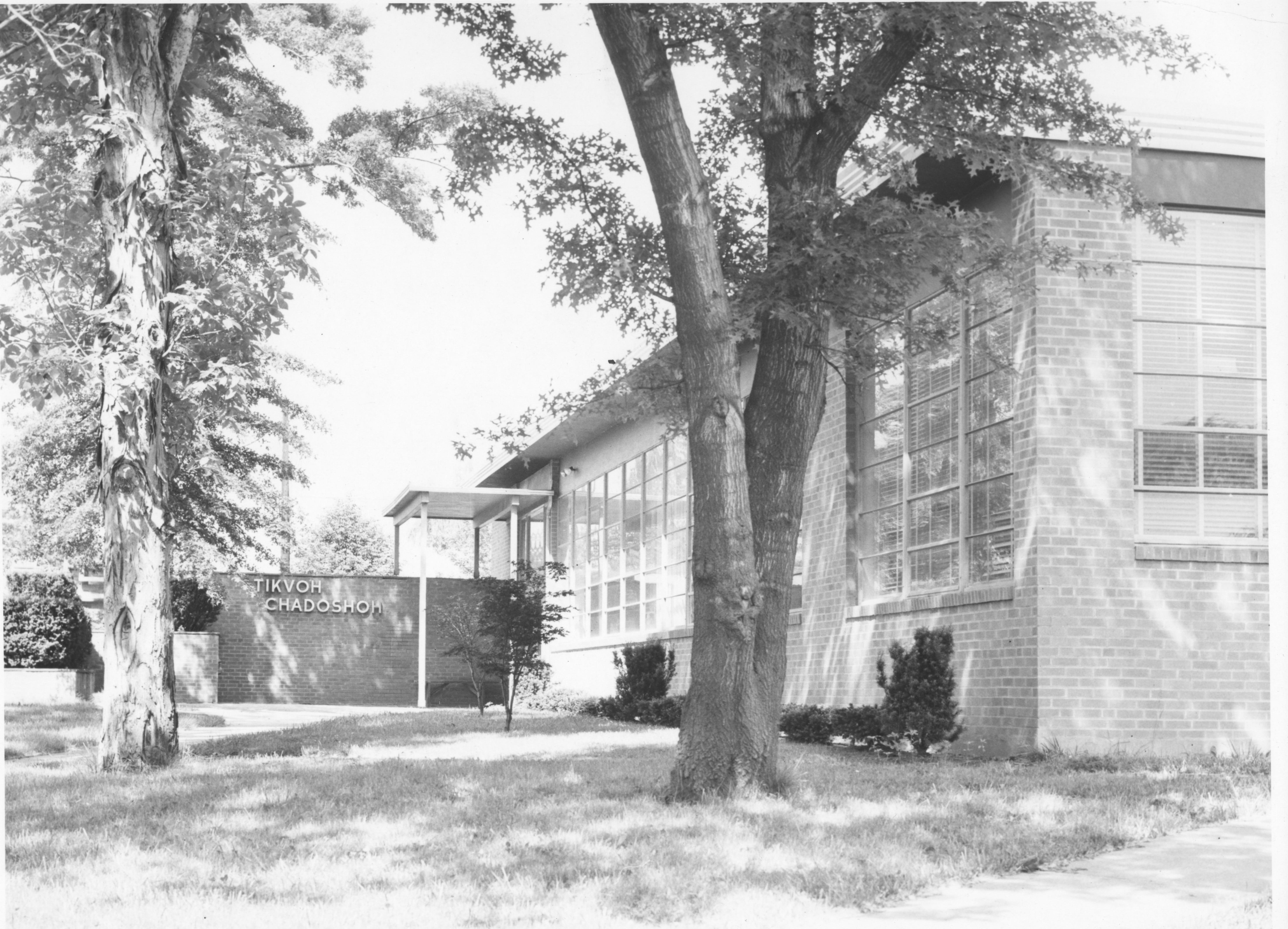
Highlights
- Date of Construction: 1956-1957
- Address: Cornwall and Granby Streets
- Architects: Kane & Fairchild
- Branch: Conservative
- Background: European-German
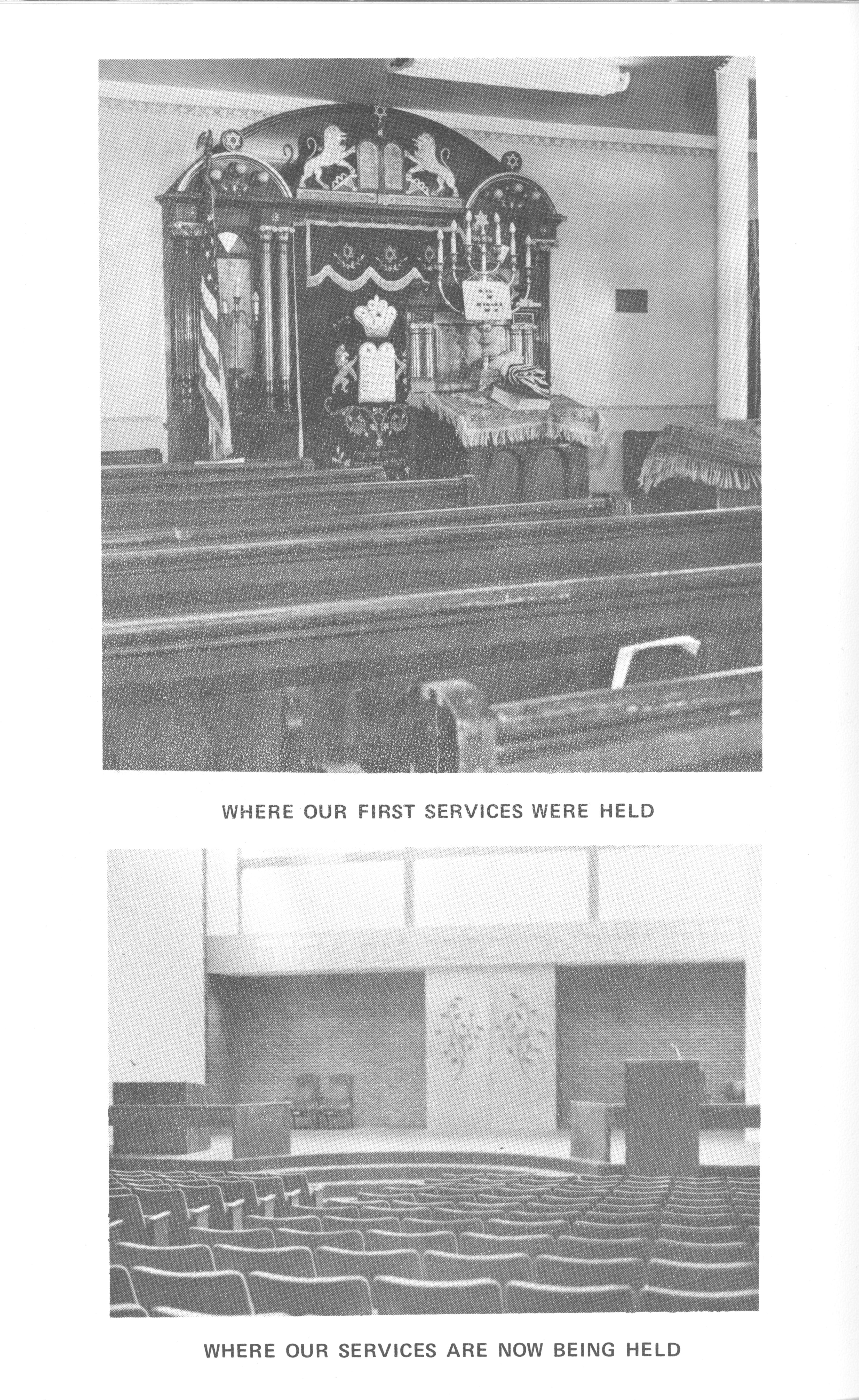
Congregation Tikvoh Chadoshoh was officially founded on November 8, 1942 by a group of eighteen men who met in the vestry of the Bedford Street Synagogue in Hartford (home of the Congregation Chevry Lomday Mishnayes). A Board of Directors (Vorstand) was elected to guide and manage the organization. The purposes of the congregation were originally declared to be: to conduct services as often as possible, especially Friday evening, to take care of the dead, and to teach the children.
With the encouragement of Holocaust survivor Rabbi Hans Bodenheimer, who became the founding spiritual leader of Tikvoh Chadoshoh, the growing congregation would continue to meet at the vestry of the Bedford Street Synagogue for both Sabbath and holiday services until 1957 when they moved into a permanent synagogue building on Cornwell Street. In 1969, this congregation would relocate to Still Road in Bloomfield.
The Tikvoh Chadoshoh synagogue on Cornwall Street had some interesting architectural features including a broad expanse of windows reaching to the high ceiling and that extended across the entire front of the sanctuary. The window was divided into twelve rectangles arranged in three columns and four sections, symbolically representing the twelve tribes of Israel. In the entrance hall of the synagogue, in a small glass-covered niche, was a piece of rough Jerusalem stone picked up by Rabbi Bodenheimer on top of Mount Zion and carried back to Hartford to serve as a constant reminder of the significance of the land of Jerusalem.